
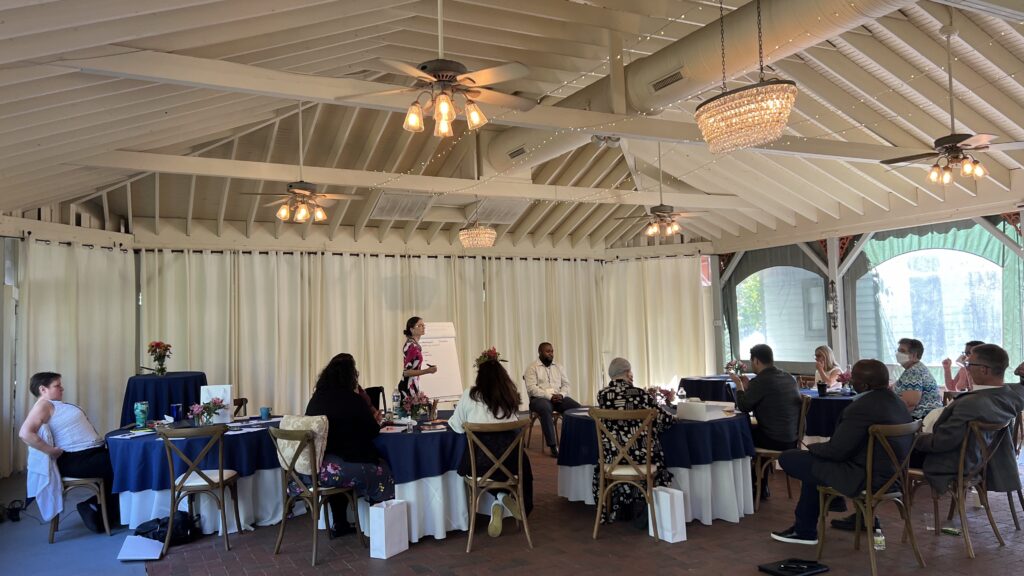
The Complete Guide to Delivering a Successful Live Event
By Nettie Owens, CPO-CD · The Sappari Group
Originally explored on the Victoria & Nettie LinkedIn Live — Episode 6
Getting people to register is one challenge. Delivering a successful live event that makes them glad they came — and eager to come back — is an entirely different one.
Most event organizers spend the majority of their preparation energy on marketing and logistics. The agenda gets built in the final days. The content gets pulled together under pressure. And the experience of being in the room — what participants actually feel, learn, and take away — gets less intentional attention than the promotional graphics did.
That is the gap this episode is built to close. In Episode 6 of Wake Up Women Leaders, Sensei Victoria Whitfield and I talked through what actually makes a live event worth attending — not just once, but repeatedly. The conversation was direct, practical, and rooted in the combined experience of two people who have planned, delivered, and attended a significant number of events between them.
The Real Stakes of Delivering a Successful Live Event
Before we get into the mechanics of great event design, it is worth being honest about what is actually at risk when an event under delivers. Because it is more than a bad afternoon.
Both Victoria and I have been in this work long enough to have seen the full picture — from the planning table through the follow-up.
Every one of those stages represents a real investment. And the stakes at the delivery stage are high — because this is where the investment either pays off or gets written off. Victoria put it plainly:
“I would say the biggest risk is loss of time, money and energy that you invested to bring everyone and everything together.”
— Victoria Whitfield
But the cost is not only to the organizer. The people in the room have invested too. They took time away from their businesses, their families, their schedules. Some of them traveled:
“If they had to get a hotel, take the day off from their work or out of their business, spend money to be there and you do not deliver as promised, then that is going to bring you down.”
— Nettie Owens
A disappointed attendee does not quietly move on. They tell people. And in the world of women’s organizations, associations, and professional communities where word-of-mouth is everything, one under delivered event can take years to recover from. The flip side is equally true: one exceptional event, delivered with intention and care, can become the thing people talk about for years and refer others to without being asked.
What event research tells us:
According to Eventbrite’s global event industry research, 78% of attendees say they discovered something new about themselves or the world at a live event. But the same research found that the top reason people stop attending recurring events is that the experience did not match the expectation set during promotion. The single most important promise you can make to an attendee is a simple, clear one — and then keep it.
The bar is not perfection. It is alignment between what you promised and what you delivered.
The Firehose Problem: Why More Content Is Not More Value
Here is the mistake that almost every first-time — and many experienced — event organizers make: they equate volume with value. More slides. More handouts. Frameworks get added. Research gets cited. Content gets packed into every available minute.
The instinct is understandable. You want to prove that the event was worth attending. You want attendees to feel like they got their money’s worth. And so you load the day with everything you know.
The result is the opposite of what you intended.
Victoria named the dynamic and the solution together:
“The reason for the shift of rather than fire hosing people and overwhelming them, where they’re just like, ah, my brain hurts… instead them feeling like, oh, I want more, I want more is because I’ve made it about the attendee and putting the spotlight on the attendee.”
— Victoria Whitfield
That shift — from proving your expertise to serving the attendee’s experience — is the central design principle of any great live event. And it requires actively resisting the impulse to add more.
I went through this evolution myself. Early in my event work, I arrived with pages of notes, extensive research, and more material than any group could absorb in a day. And I shared most of it. Over time, I learned to edit ruthlessly:
“It really narrowed down how much I shared after that. So instead of thinking I needed pages and pages of notes and research and things that were going to be shared, I whittled it down significantly to what are the three main things they need. What’s the main thing? And then what are the three things that support that?”
— Nettie Owens
One main idea. Three supporting points. That structure is not a limitation — it is a design choice that respects your attendees’ cognitive capacity and gives them something they can actually leave with and use. An attendee who walks away with one clear, actionable insight has received more value than one who leaves with twelve half-formed ideas they cannot remember by dinner.
One clear takeaway your attendees will act on is worth more than twelve ideas they can’t remember by the time they reach the parking lot.
What Over-Delivering Actually Looks Like
Victoria raised the question that sits at the heart of delivering a successful live event:
“What do you do? There’s these gurus that talk about, oh, you gotta add value and over deliver, and who knows what the heck that means? So how do you over deliver without overwhelming your attendees as well as overwhelming yourself?”
— Victoria Whitfield
It is a fair challenge to the conventional advice. “Over-deliver” as a concept has been so overused that it has lost its meaning. Here is what it actually looks like in practice, based on what Victoria and I have learned across the events we have each hosted and attended:
Deliver on your promise first
Before anything else, make sure you fulfill the specific outcome you promised when people registered. If the event description said attendees would leave with a 90-day plan, make sure that plan exists before the day ends. If it said they would learn a specific framework, make sure that framework is taught clearly and practiced. The extras — the community, the connection, the bonus content — are meaningful only if the core promise has already been kept. As I put it directly:
“So what we’re talking about here is really needing to prepare. Prepare well, have a clear objective of what your people are going to receive and make sure that that objective aligns with what you told them.”
— Nettie Owens
Facilitate, do not lecture
The distinction here is fundamental, and it applies whether your event is a half-day workshop or a multi-day retreat. I used a specific term during the episode that I want to emphasize:
“The word that comes to mind is facilitate adult learning. And that’s mostly what we’re talking about here… facilitate adult learners.”
— Nettie Owens
Adults do not learn by sitting still and absorbing information. They learn by doing, discussing, applying, and connecting new ideas to their existing experience. An event that treats attendees as passive recipients of your knowledge will lose them within the first hour. An event that positions them as active participants in their own learning will have them leaning forward all day.
This means building in interaction. Pair-and-share activities. Reflection prompts. Small group discussions. Time to write and process. The content is the structure — but the learning happens in the spaces between your talking points. I went further on this:
“Knowing what makes adult learning work, not sitting in seats is what makes adult learning and other learning work. Means get them up, move them around, have them do movements while they’re talking and learning and change environment, things like that.”
— Nettie Owens
Create connection between attendees
The content of a great event is valuable. The community built around a great event is often more valuable — and it is what makes people return. Build structure that helps attendees meet and engage with each other meaningfully, not just awkwardly across a networking break. Introductions with intention. Shared reflection. Structured conversation prompts. The connections people make in the room are frequently the thing they reference months later when they describe why the event was worth attending.
Preparation Is the Work Nobody Sees
There is a version of event delivery that looks effortless from the attendee’s perspective. The facilitator is present, relaxed, and responsive. The transitions are smooth. The content lands clearly. The day flows.
That ease is entirely the product of preparation. Delivering a successful live event is not an improvised performance — it is a rehearsed one that has been designed to feel spontaneous.
Victoria’s experience across audiences of various sizes speaks to this. She noted during the episode:
“I think my max audience has been between 3 and 500 people.”
— Victoria Whitfield
And earlier in her career, she made the same common mistake many event organizers make — bringing too much material, trying to cover everything, leaving attendees overwhelmed rather than inspired. The difference between an average event and an exceptional one is not what you know. It is how deliberately you have chosen what to share and how intentionally you have designed the experience of receiving it.
Practically, this means:
- Rehearsing your transitions, not just your content. The moments between sections are where events lose momentum.
- Timing your segments. If a section is designed to take 20 minutes, practice it at 20 minutes. Running long is one of the fastest ways to lose attendee trust.
- Building in buffers. Real events run differently than planned ones. Give yourself margin so that a conversation that runs five minutes long does not cascade into a day that ends 40 minutes late.
- Starting and ending on time. This is a form of respect that communicates professionalism and honors the commitments your attendees made to be there.
- Planning your energy as well as your content. A full-day event is physically and cognitively demanding for the facilitator. Know where your high-energy segments are, and plan lower-demand moments after them so you can sustain quality throughout.
Following Up: The Final Step in Delivering a Successful Live Event
The event is over. The last attendee has walked out. The room is being broken down. Most organizers at this point are simply exhausted — and the follow-up, which is genuinely part of the event experience, gets rushed or skipped entirely.
This is a significant missed opportunity.
The 24 to 48 hours after an event are when attendee enthusiasm is at its highest. When reflections are freshest. When the connection between what they experienced and what they need next is most vivid. A well-executed follow-up sequence captures that energy and channels it into the next step — whether that is joining a program, booking a consultation, registering for the next event, or simply deepening their relationship with you and your work.
Practically, this means building your follow-up plan before the event, not after. Know what you will send, when you will send it, and what you are inviting people to do next. The content of that follow-up should reference specific moments from the event — not a generic thank-you message that could have been written before anyone arrived.
And critically — make the ask. Not in a pushy or transactional way, but in a genuinely helpful one. The people who attended your event came because they have a need. Your follow-up is the bridge between the value they just received and the deeper support you can offer.
Your follow-up is the natural extension of that work. Do not leave it to chance.
The Standard Worth Building Toward
Delivering a successful live event is not about perfection. It is not about having the most elaborate production or the biggest budget. It is about making and keeping a clear promise to the people who trusted you enough to show up.
Victoria said something during the episode that I keep coming back to as the right standard for any event organizer:
“It is not enough to get people to say yes to attending your event. You have to have something worth coming back to, worth attending once and twice, three times.”
— Nettie Owens
That is the bar. Not filling the room once. Building something people return to because the experience consistently delivers on what it promises — and occasionally exceeds it in ways that surprise them.
You already have the expertise. You have the vision for what this event could be. Intentional preparation — not additional knowledge — almost always closes the gap between what you planned and what attendees experience. Design for the attendee’s experience, not to demonstrate your knowledge.
That shift in orientation changes everything. It changes how you structure your content, how you facilitate the room, how you handle the unexpected moments, and how you follow up when it is over.
In Episode 7, Victoria and I are going back to the beginning of the funnel — to the question of how you get people to register in the first place. If you have the delivery side of your events in strong shape and want to fill more seats, that conversation is for you.
READY TO KEEP GROWING?
Explore how to create success systems that honor your unique journey and expertise.
Subscribe to The Weekly Reset, where I share research, ideas, and strategies for leaders navigating the complexities of sustained impact.
Join the Accountability Club — support designed for strategic planning, implementation, and growth with a monthly peer mastermind for meaningful connection and ongoing strategic support.
If you’re looking for a personalized partnership to create space, a plan, and focus in your leadership, let’s talk. I offer Private Executive Coaching for executives and entrepreneurs ready to move from overwhelmed to clear, from scattered to focused.
Send me a message, I’d love to explore how we can support your continued growth.