
By Nettie Owens, CPO-CD · The Sappari Group
Originally explored on Wake Up Women Leaders — Episode 14
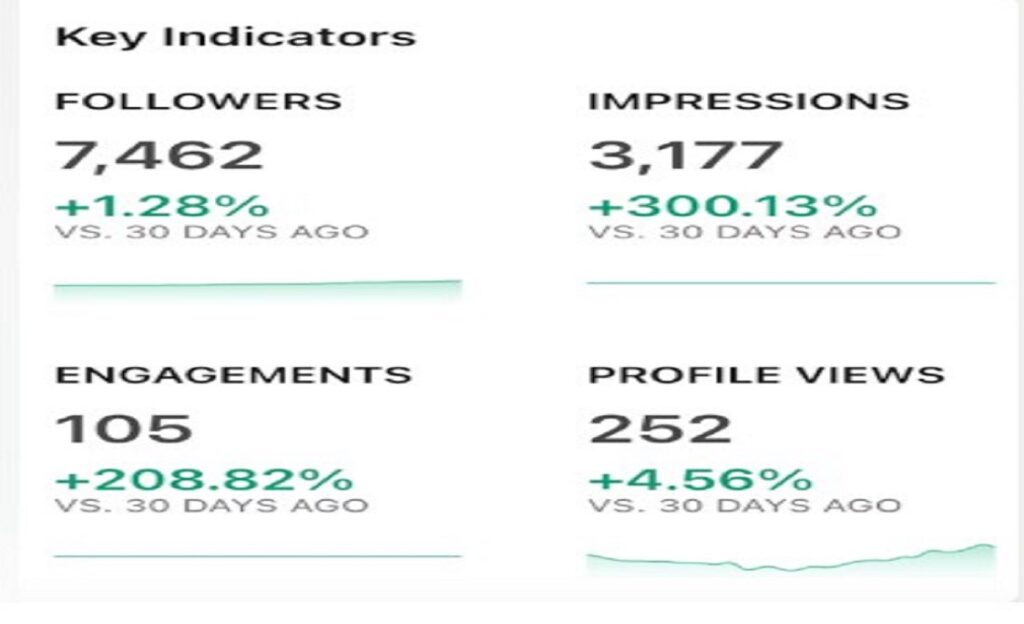
You posted something this week. It did well. People liked it, shared it, commented on it, maybe even sent you a message saying how much it resonated. And then you looked at your revenue — and nothing moved.
If that is a familiar experience, you are not alone. And you are not failing at social media. You are succeeding at the wrong goal.
In Episode 14 of Wake Up Women Leaders, Victoria Whitfield and I had a conversation about the gap between social media engagement and actual sales — what creates it, why so many women leaders fall into it, and what to do differently. This is not a conversation about posting less or abandoning social media. It is about understanding what your content is actually for and building a system that connects it to revenue.
Engagement and Sales Are Not the Same Thing
Let us start with an important distinction: Likes, comments, shares, and follows are not buying signals. They are awareness signals — and awareness is only the first step in a much longer sequence.
As Victoria said: “Likes, comments and follows themselves are not a sign that people want to buy your product, program or service. It’s just a sign that, okay, I was here essentially.”
However, that does not mean engagement is worthless. An engaged audience is genuinely valuable — these are people who know you, follow you, and return to your content. But knowing you and paying you are two entirely different relationships. The bridge between them requires something you might not be building into your content strategy: a clear, consistent ask.
Women leaders growing their business on social media have to understand this risk pouring significant time, money, and energy into content that produces visibility without producing revenue. And visibility that does not convert is not a business strategy. It is a very expensive hobby.
The Cost of Posting Without a System
How much are you spending on your social media presence right now?
Not just time. Money. Platform subscriptions, scheduling tools, Canva, ad spend, a graphic designer, maybe a social media manager or VA who is posting for you consistently. “How many of you are paying for a whole freaking department — and you’re looking at the money going out, and the story internally is, I’m doing it because that’s what I’m supposed to do,” asked Victoria.
That story — that posting consistently is inherently productive — is an expensive assumption for a business owner. Consistency matters. But consistency without results is just activity. And activity without conversion is a cost center, not a growth strategy.
Women leaders growing their business on social media need to ask a harder question than how often am I posting. The question is: do I have a clear line between this post and a sale? If the answer is no — or I am not sure — then the system needs work before the posting schedule does.
What You Are Actually Building When You Post
Every piece of content you put out is doing one of three things. It is building awareness — introducing you to someone who has never seen your work. It is building trust — deepening the relationship with someone who already knows you exist. Or it is driving conversion — inviting someone who is already aware and already trusts you to take a specific next step.
Most leaders’ content is almost entirely awareness. They post to be seen, to stay visible, to signal that they are active and present. There is nothing wrong with awareness content — except when it is the only kind you produce. If you have no trust-building content and no conversion content, you have an audience that grows but never buys.
“Is that post for awareness? Is it for trust building? Do you have anything in the pipeline that speaks to conversion?” Add the audit to your content calendar.
The goal is not to make every post a sales pitch. That is how you become the thing Victoria described in Episode 11 — the pitch fest nobody wanted to attend. The goal is to have all three types of content working in sequence, so that the people who discover you through awareness content eventually have a clear path to becoming clients.
The Ask You Have Been Avoiding
There is a specific reason women leaders growing their business on social media tend to under-convert, and it is not a strategy problem. It is a sales comfort problem.
“It is not enough to show up and look pretty and not ask for what you want.”
Asking for the sale is uncomfortable. For a lot of women, it activates a real cultural tension — we are so practiced at giving, at being helpful, at adding value without expectation, that asking someone to pay us can feel fundamentally at odds with who we are in a professional context. Victoria pointed to this: the starving artist archetype, the person with tens of thousands of followers who is broke because they have never connected their visibility to an invitation.
She told the story of a cohort member — a first runner-up from American Idol, nationally recognized, genuinely talented — who was in a marketing program trying to figure out how to make money because fame had not paid his bills. “If you would just put one post or even pick up your phone right now and press go live and say, hey, I’ve decided to start offering voice lessons, I’ll drop the link in the comment below — your life would explode.”
That story is not about fame. It is about the gap between being seen and being paid — a gap that only closes when you make the ask. Your engaged audience is full of people who know you, follow you, and trust you. They are potential clients. But they cannot buy something they have never been invited to buy.
“God gave you two hands. Give and receive with one of each.”
Start With Why You Are Posting
The clearest place to start fixing this is not the content itself. It is the intention behind it.
Before you write the next post, ask: what do I want someone to do after they read this? Not feel — do. If the answer is nothing specific, you are posting for attention. And as Victoria said, attention is not the win.
Victoria reframed this: “When you make money, you are helping someone. More good is happening in the world. And when more good people like you make good money, more good happens in the world.”
That is the reframe women leaders growing their business on social media need to carry into every piece of content they create. The ask is not an imposition. It is an invitation for someone who needs what you offer to take the next step. Withholding it does not serve your audience. It just leaves them without a path forward.
Of course, Every post does not need a hard sell. But every post should have a job. And periodically — regularly — that job should be to invite someone to buy something, book something, or take a specific action that moves them closer to working with you.
The Tracking You Are Not Doing
This is where the conversation gets operational — and where a lot of creative, big-picture leaders check out. Stay with me, because this is the part that actually determines whether anything changes.
“Tracking is a non-negotiable. This is not something that’s a nice to have. If you don’t know what works and what doesn’t, you are wasting your time, you are wasting your money.”
Most leaders who are posting consistently have no idea which of their posts are actually driving conversations, inquiries, or sales. They know which posts got the most likes. Those are not the same thing.
What to track is simpler than most people make it. For each post: what was the content, what type was it (awareness, trust, or conversion), what time did you post it, did it have a call to action, and what happened in the 48 hours after — did you get DMs, inquiries, bookings, or sales? You do not need a complex system. You need a spreadsheet and the discipline to fill it in.
The 80/20 principle applies here directly. Twenty percent of what you are doing is producing eighty percent of your results. The only way to find that twenty percent is to track everything and make decisions from the data — not from your gut, not from what you think should be working, and not from what you see performing well on someone else’s account.
“One of the most successful women in online marketing has all her data from every post she has ever made — years upon years of information — and she is constantly looking at that information and making decisions from it.”
That is not a coincidence. It is a system.
If You Have Not Made a Sale Yet
For the women leaders growing their business on social media who are in early stages — who have not yet established a consistent revenue stream — Victoria offered the a practical starting point.
If someone has paid you — even once — stop everything and trace it back. “How did this money find me?” What does that person have in common with other people you have served well? How did they describe what they got from working with you? Where were they before they found you?
That thread is your data. It is more useful than any trend, any viral post, and any social media strategy you could read about online. Build your next round of content around what actually brought the person who paid you to your door — not around what is performing on someone else’s feed.
Three Things to Change This Week
- Look at your last ten posts and categorize each one: awareness, trust-building, or conversion. If you have no conversion posts in that set, that is the first thing to fix. Pick one post that performed well and add a clear next step — a link, an invitation, a direct ask. See what happens.
- Start tracking. Create a simple log: post date, content type, call to action (yes or no), and any response it generated. Run it for 30 days before drawing conclusions, but start now.
- Trace your best client back to its source. How did they find you? What did they respond to? Use that answer to shape what you post next.
What’s Coming Next
In Episode 15, Victoria and I are drawing the line between an event and an experience — because your audience can feel the difference, even when the agenda looks identical on paper. Join us Wednesday at 3:30pm ET.
READY TO KEEP GROWING?
Explore how to create success systems that honor your unique journey and expertise.
Subscribe to The Weekly Reset, where I share research, ideas, and strategies for leaders navigating the complexities of sustained impact.
Join the Accountability Club — support designed for strategic planning, implementation, and growth with a monthly peer mastermind for meaningful connection and ongoing strategic support.
If you’re looking for a personalized partnership to create space, a plan, and focus in your leadership, let’s talk. I offer Private Executive Coaching for executives and entrepreneurs ready to move from overwhelmed to clear, from scattered to focused.
Send me a message, I’d love to explore how we can support your continued growth.
Nettie Owens, CPO-CD · The Sappari Group · sapparigroup.com · © 2026