
By Nettie Owens, CPO-CD · The Sappari Group
Originally explored on the Victoria & Nettie LinkedIn Live — Episode 7
Event marketing for women leaders starts long before anyone walks through the door.
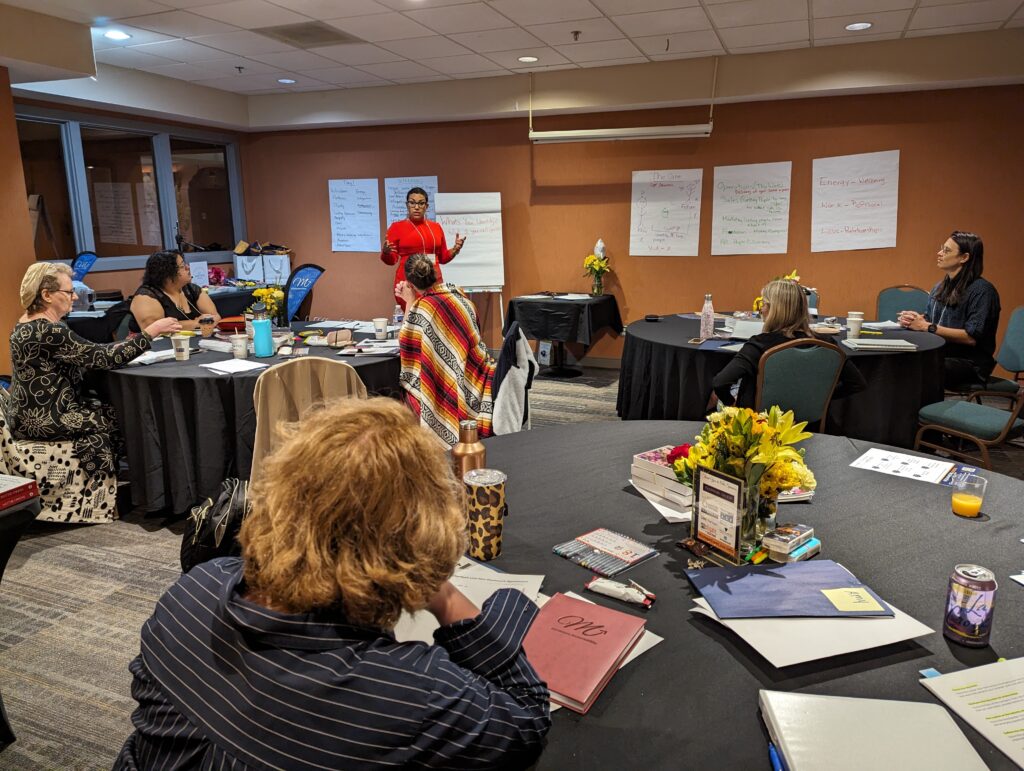
You have planned the agenda. You have the venue, and you have a vision for what this event could be. And then the question arrives: is anyone actually going to show up? How do I actually get butts in seats?
Event marketing is an almost universal challenge for professional gatherings, workshops, and organizational events. Everyone has a story about a beautifully prepared event that drew a fraction of the expected attendance. Most people don’t want to tell that story. The assumption seems to be that if you build something valuable, people will find it.
They will not. Not reliably. Not without a plan.
In Episode 7 of the Wake Up Women Leaders series, Sensei Victoria Whitfield and I put this challenge directly on the table. Victoria opened with the problem:
“We are talking about getting butts in seats. So this is, gosh, the puzzle that we all have to figure out for people who host events, workshops, gatherings.”
— Victoria Whitfield
Both of us have hosted events to empty or near-empty rooms. Both of us have also hosted events that filled beyond expectations. The difference was not the quality of the content. It was the presence — or absence — of a real marketing plan.
The Problem: A Vision Board of Your Event Won’t Fill It
We talked previously about how to plan an event. What to put in the agenda. How to structure the day. What kind of venue works best. How to design a memorable attendee experience.
But there is a cost to trying to deliver an event without a marketing plan.
When leaders assume the problem is their content — when they go back and redesign the curriculum, upgrade the speakers, or add more value to the offer — they are solving for the wrong variable. The content was fine. The marketing was absent.
Nettie named the core tension:
“You’re going to fill your company. You’re going to sell all of this stuff if you have an event? Well, yeah, only if people come.”
— Nettie Owens
That “only if” carries the entire argument. The most transformative event in the world cannot transform anyone who did not register. And registration does not happen through intention or excellence alone. It happens through sustained, strategic marketing that begins long before the event date and continues all the way through the door.
What event industry research shows:
According to research from Bizzabo’s State of In-Person B2B Conferences report, 79% of marketers say in-person events are their organization’s most impactful marketing channel. Yet the same study found that 61% of event organizers cite low attendance as their top challenge. The gap between the power of live events and the difficulty of filling them is real — and it is almost entirely a marketing and timing problem, not a content problem.
The value of your event is not the issue. The visibility of your event is.
What Does Not Work: An Honest Inventory
Before we get into what does work in event marketing for women leaders, it is worth being direct about what does not — because most of these tactics feel reasonable in the moment and produce almost nothing in practice.
Victoria was candid about her own early experiments:
“I hung a flyer at the local post office because it was a local event.”
— Victoria Whitfield
The response to that was immediate and accurate:
“Is the post office where your customers live? No.”
— Nettie Owens and Victoria Whitfield
It sounds like a small mistake. But it represents a much larger pattern: marketing your event where it is convenient for you rather than where your actual audience is. The post office, the single Eventbrite listing, the one social media post, the elaborate printed invitation sent to people who are not in your target audience — these are all versions of the same error.
Victoria also named the single-post trap directly:
“What has not worked in the past is just putting a post. And yay. Oh, that means I’m official.”
— Victoria Whitfield
One post does not make a marketing campaign. It makes an announcement. And announcements, without sustained follow-through, disappear into the feed within hours and are forgotten within days.
The timing problem compounds everything. Victoria described the window that most people treat as their marketing runway:
“If you do these things in isolation and at the last minute, which by the way, at the last minute means seven to 14 days of this thing happening, your event happening…”
— Victoria Whitfield
Seven to fourteen days is not a marketing window. It is a panic window. And as I noted during the episode, there was exactly one period in recent history when last-minute virtual event promotion worked:
“There was one time in history when that worked and that was Covid and we are not in Covid. That is the only time it worked.”
— Nettie Owens
The conditions that made short-notice event marketing work during lockdowns — captive audiences, limited alternatives, heightened appetite for connection — do not exist anymore. Planning for those conditions in a normal event environment is planning to underdeliver.
Seven to fourteen days before your event is not a marketing runway. It is a panic window. By then, your audience’s calendars are already full.
The Movie Trailer Mindset: What Actually Works
Effective event marketing for women leaders requires a fundamental shift in how you think about the promotional timeline. Victoria offered the reframe that changes everything:
“The mindset shift that we want to have around advertising an event is make it similar to advertising a movie.”
— Victoria Whitfield
Think about how a major film is marketed. The campaign begins months before release — sometimes a year or more in advance. There are teasers, then trailers, then features, then reminders, then final pushes. By the time the opening weekend arrives, the audience has seen enough to be invested, to have told friends, to have marked the date on their calendar. They are not discovering the film for the first time when they walk into the theater. They have been in relationship with it for months. Event marketing for women leaders works the same way — the room fills long before the doors open.
Your event deserves the same arc. Not because it requires a Hollywood budget — but because that sustained rhythm of exposure is what moves people from vague interest to committed registration.
Here is what that looks like in practice for a typical live event:
- 6-12 months out: Announce the date and save-the-date information. Create early momentum. Open early registration if possible.
- 3-6 months out: Share the what and the who. What will attendees leave with? Who is this event built for? Answer those questions repeatedly across your channels.
- 2-3months out: Begin sharing social proof. Testimonials from past events. Photos from previous gatherings. Stories of transformation. Let your existing audience become your marketing.
- 4 weeks out: Create urgency. Seats remaining. Registration closing. Final chance messaging. Give the undecided a reason to act now.
- 2 months out: Shift to attendee nurture. Keep registered attendees engaged and excited. Reduce no-shows by maintaining the relationship through the door.
This is not complicated. But it requires starting significantly earlier than most event organizers do — and it requires showing up consistently across the entire runway, not just at the beginning and the end.
Your List Is Your Leverage: Event Marketing for Women Leaders Who Already Have an Audience
One of the most underutilized assets in event marketing is the list you already have. Past attendees. Newsletter subscribers. Social media followers. Former clients. Community members. People who have raised their hand in some form and said they are interested in what you do.
I said this directly during the episode because it is a mistake I see constantly:
“Use your list. You don’t, you’re not talking to an empty room.”
— Nettie Owens
Most event organizers treat each event as though they are starting from scratch. They focus almost entirely on reaching new people and neglect the warm audience that is already in front of them. That warm audience — people who already know you, trust you, and have experienced your work — is almost always more likely to register than a cold audience reached through paid advertising.
Past attendees are particularly valuable. Victoria made this point with a clarity that is worth carrying into every post-event conversation you have:
“If you deliver a great event, then that is going to help seed your next event.”
— Victoria Whitfield
The implication is important: your current event’s marketing begins before the previous one ends. When you deliver an exceptional experience and immediately invite attendees into the next one — while the energy is high, while the transformation is fresh, while they are standing in front of you — you are building the foundation for a self-sustaining event community.
Victoria extended this further:
“When you do an event, be prepared for human nature to take over when you rock it, not if, when you rock it. People are going to ask when’s the next one?”
— Victoria Whitfield
Have the answer ready. Never miss that moment.
Never Miss the Sale: Building Continuity Into Your Event Strategy
One of the most powerful things Victoria said in this episode was also one of the simplest. After delivering a great event, most organizers pack up and go home. The momentum dissipates. The follow-up is delayed. And the next event has to start building from close to zero.
The leaders who build consistent, well-attended events do something different. They treat each event as a chapter in an ongoing relationship with their community, not a standalone transaction. Victoria described this as a non-negotiable:
“Never miss the sale. People love what you do, right? When you put your heart and soul into it, you put together an amazing event, give them the opportunity to continue to be involved and you can have year after year after year like yours truly of filled events because you have your regulars coming, just like at the local bar.”
— Victoria Whitfield
The regulars. That image is exactly right. The most consistently full events are the ones that have cultivated a base of people who come back not just because the event is good, but because it is theirs. They feel known there. They bring friends, and they register early because they do not want to miss it.
That community does not build itself. It is built through consistent delivery, consistent communication, and — critically — consistently asking people to come back. As Victoria also put it:
“People will teach you how to treat them. People will teach you what they want.”
— Victoria Whitfield
Pay attention to who shows up, who registers early, who brings a friend, and who follows up afterward. Those people are telling you exactly how to serve them better and how to build the kind of event community that fills itself.
The Plan Is the Point
Effective event marketing for women leaders is not glamorous work. It is not a single creative post or a well-designed flyer. It is a sustained, intentional campaign that begins months before the event date and continues until every seat is filled — and beyond that, into the foundation of the next one.
“You need a real marketing plan in order to have an event. This is not pick a date, put it on the calendar and people are going to show up just because you’re excited about it. You actually need to talk about it.”
— Nettie Owens
Start the conversation early, keep it consistent, and share it where your audience actually spends their time. And when the event is over, start talking about the next one.
“Don’t feel like you need to start from scratch. And the last thing is, don’t forget that this is just one event. There will be another event.”
— Nettie Owens
Each event offers a lesson. Every registration cycle provides valuable data. Attendees, whether directly or indirectly, show you what they need and what drew them to you. That information compounds over time into something genuinely powerful: a community that trusts you enough to keep showing up.
Let the process be instructive. And as I said to close the episode — let it be fun too.
In Episode 8, Victoria and I are going to shift the lens to something a little different: what ancient wisdom has to say about the obstacles that modern women leaders face. If you have been navigating a challenge that feels bigger than strategy can solve, that conversation is for you.
READY TO KEEP GROWING?
Explore how to create success systems that honor your unique journey and expertise.
Subscribe to The Weekly Reset, where I share research, ideas, and strategies for leaders navigating the complexities of sustained impact.
Join the Accountability Club — support designed for strategic planning, implementation, and growth with a monthly peer mastermind for meaningful connection and ongoing strategic support.
If you’re looking for a personalized partnership to create space, a plan, and focus in your leadership, let’s talk. I offer Private Executive Coaching for executives and entrepreneurs ready to move from overwhelmed to clear, from scattered to focused.
Send me a message, I’d love to explore how we can support your continued growth.
Nettie Owens, CPO-CD · The Sappari Group · sapparigroup.com · © 2026