
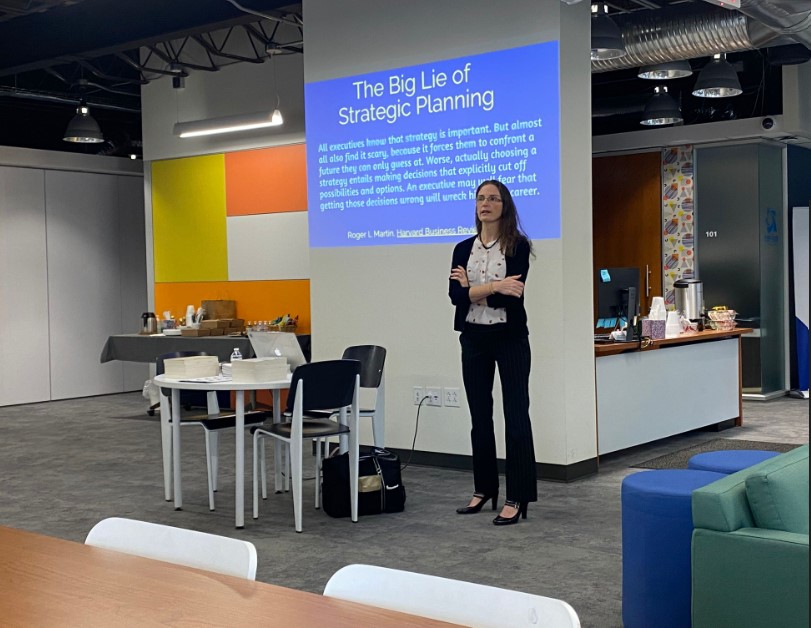
Originally explored on the Victoria & Nettie LinkedIn Live — Episode 4
Few professional experiences sting quite like low event attendance. You planned for weeks, maybe months. You built the agenda, drafted the emails, posted on social media, confirmed the venue, and showed up early to make sure everything was right. And then you stood there — in a room that was mostly empty — and tried to figure out what went wrong.
If you have been there, you know it does not feel like a business problem in the moment. It feels personal. Like a judgment on your work, your ideas, and your ability to lead. And because it feels that way, most people do one of two things: they spiral into self-doubt and second-guessing, or they quietly bury the experience and move on without ever mining it for what it was actually trying to tell them.
In Episode 4 of the Victoria & Nettie LinkedIn Live series, Sensei Victoria Whitfield and I sat with this experience directly — honestly, vulnerably, and practically. Victoria opened the conversation with something that immediately set the tone:
“This is the event that nobody came to. Oh my gosh, what an experience where you do all the right things, you did everything that you were supposed to do… and then you get there and nobody shows up.”
— Victoria Whitfield
That description is painfully familiar to anyone who has organized events. And it is exactly why this conversation needed to happen.
What Low Event Attendance Is Really Telling You
The first thing Victoria and I want to say, plainly and without qualification: low event attendance is not automatically a reflection of your value, your expertise, or the quality of what you prepared. Life happens. The weather changes. Calendars fill up. Kids get sick. Competing priorities emerge. Sometimes people register with full intention and simply cannot make it.
But sometimes, low attendance is a signal. And the difference between leaders who grow and those who get stuck is whether they are willing to read that signal clearly instead of either dismissing it or letting it devastate them.
“Low attendance isn’t necessarily a problem with the event itself, but there are things that need to be addressed, and we want to make sure that you’re picking up on the signs of what’s happening when low attendance shows up in your world.”
— Nettie Owens
That framing is important. Low attendance is a data point. It is not a verdict. But data points that go unexamined cannot teach you anything — and the leaders who treat every empty-room experience as a learning opportunity, rather than a personal failure, are the ones who build events that consistently fill.
What the research says:
A study from the Harvard Business Review on organizational learning found that leaders who conducted structured post-event reviews — even after failures — improved their outcomes measurably faster than those who moved on without reflection. The key variable was not the failure itself, but whether the leader extracted a lesson and applied it. Low event attendance, examined honestly, is one of the most instructive feedback loops available to an event organizer.
The empty room isn’t the end of the story. It’s the beginning of a better one — if you’re willing to read it.
So let’s read it together.
The Real Reason Most Events Underperform: Delivery Is Not Marketing
Of every insight Victoria and I covered in this episode, this is the one I most want to land — because it is the one that trips up the most talented, capable, genuinely excellent event organizers and leaders I know.
Being brilliant at delivering an event is a completely different skill set from being effective at filling one. And conflating the two is one of the most common — and most costly — mistakes in the events world.
Victoria named it with four words that I want you to write down:
“Delivery is not marketing.”
— Victoria Whitfield
She expanded on this in a way that is worth sitting with:
“Just because you’re passionate and you’re an expert… that has pretty much nothing to do — it is a completely separate thing from marketing and sales.”
— Victoria Whitfield
This is not a criticism of expertise. It is a structural reality. The skills required to design a transformative workshop, facilitate a meaningful gathering, or host a high-value conference are real and significant. But they are not the same skills required to build an audience, generate anticipation, and drive registrations. Both matter. And treating your event-building competency as evidence of your marketing competency will consistently produce low event attendance — regardless of how good the event itself actually is.
You can design the most valuable event of the year and still have an empty room. Not because the event wasn’t worth attending — but because the right people never knew it existed.
Ask yourself honestly: How far in advance did you start promoting? Did you give your audience enough runway to plan around your date — four weeks, ideally six to eight (or more!) for larger events? Was it crystal clear in every piece of communication who this event was for and what they would walk away with? Did you follow up with people who expressed interest but hadn’t registered?
These are marketing and sales questions. They are distinct from the programming questions. And they both need answers.
What to Do When Low Event Attendance Happens
Let’s be practical. Because knowing the causes of low event attendance is useful, but knowing what to do in the moment — when you are standing in the room and the seats are empty — is what actually gets you through it and sets you up for what comes next.
I want to say first what I said during the episode:
“I think anyone who’s been in business long enough to have hosted an event can relate to the work and effort that you put in.”
— Nettie Owens
That work is real. The effort is real. And it deserves to be honored — not by collapsing under the weight of disappointment, but by doing the next right thing with whatever is in front of you.
If a few people showed up: treat them like they won the lottery
The people who are in the room made a choice to be there. They rearranged their schedules, navigated their competing obligations, and showed up. That deserves your full energy and complete presence. A small room, run well, creates the kind of experience that generates powerful testimonials, genuine referrals, and loyal repeat attendees. Some of the most impactful events I have seen were intimate gatherings that felt exclusive precisely because they were small.
And critically — use the opportunity. Victoria was direct about this:
“If there are people in the room, even if it’s one or two people in the room, you have got to get the testimonial, you have got to get the photos together and get their feedback on the event so that you have that collateral and content for marketing at a later time.”
— Victoria Whitfield
Do not leave that room without it. Testimonials from a small, well-served group are more powerful than vague praise from a crowd. Collect them while the experience is fresh, when people are most willing and most genuine.
If no one showed up: create content anyway
Your material is prepared. You are dressed and ready. The room is set. Do not let all of that go to waste because the seats are empty. Go live on social media. Record yourself delivering a key section of what you had planned. Share a behind-the-scenes moment that is real and honest about what happened. Announce the next date right then, while you are there.
The empty room, reframed, becomes proof of your consistency. Leaders who show up even when it is hard are the ones audiences eventually trust enough to actually show up for.
Protect your energy — for the people who are there
This is the piece that requires the most discipline, and it may be the most important one. Whatever you are feeling about the people who did not come — set it aside. Not because it does not matter, but because bringing it into the room actively harms the experience for the people who did come.
“If the whole day you’re lamenting all the people who aren’t there… you’re bringing your energy into it and it is negative.”
— Nettie Owens
The people in front of you deserve your best — not a distracted, depleted version of you grieving the people who are absent. Process the disappointment later. Be fully present now.
The Hidden Cost of the “Free” Event
One thread in our episode conversation that I want to pull out separately: the myth of the free event.
Many leaders host free events as a visibility and lead-generation strategy — which is a legitimate approach. But there is a framing problem that makes low event attendance at a free event feel confusing and demoralizing in a particular way: if it’s free, why didn’t more people come?
Here is the answer, and it matters:
“Your free event isn’t free for you. You’re putting a lot of money into the development, the marketing and sales, the delivery, and then the follow-up.”
— Nettie Owens
Free to the attendee is never free to the organizer. There is time, preparation, design, promotion spend, follow-up labor, and in many cases direct costs for the venue, materials, or platform. When you treat low event attendance at a free event as a minor inconvenience because “at least it didn’t cost anyone anything,” you are discounting the very real investment you made to put it on.
That investment deserves to be evaluated honestly. What was the return? What did you learn? And What would need to change to make the next one worth the cost — to you?
Treating every event, free or paid, with the same analytical rigor is how you shift from reactive event-planning to strategic event-building. And that shift is what moves you from low event attendance to consistently full rooms.
Building Systems So This Doesn’t Keep Happening
The long-term solution to low event attendance is not to work harder around the event itself. It is to build consistent, repeatable systems into the lead-up to every event — so that marketing is not something you scramble to do in the final week, but something that is built into your operating calendar from the moment you confirm a date.
Here are the areas worth systematizing:
- Marketing runway: For most events, one to two weeks of promotion is not enough. Four to six weeks is a more reliable standard, and for larger events or higher-ticket experiences, longer still. Build your promotional calendar backwards from the event date, not forwards from when you remember to start promoting.
- Clarity of offer. Every piece of communication about your event should answer three questions immediately: Who is this for? What will they leave with? Why does it matter now? If any of those is unclear, registrations will stall — regardless of how good the event actually is.
- Follow-up cadence. Most registrations happen after multiple touchpoints. A single email or post is rarely enough. Build a follow-up sequence that reaches registered attendees in the days before the event, and reaches interested-but-not-yet-registered contacts with a clear final prompt.
- Post-event collection. Testimonials, photos, feedback forms, and key quotes should be gathered within 24 to 48 hours of every event. This is your content and credibility fuel for the next promotion cycle. Build the collection process into your post-event checklist so it never gets skipped.
- Debrief and iteration. After every event, run a structured review: What worked? What did not? What does the data — registrations, attendance rate, engagement, follow-through — suggest about what needs to change? Low event attendance that is reviewed and learned from becomes a competitive advantage. Ignored, it just repeats.
The Empty Room Is Not the End of the Story
Low event attendance does not mean you failed. It means you have information — and now you get to decide what to do with it.
The leaders who build thriving events, full rooms, and engaged communities do not get there because they never had a quiet turnout or an awkward no-show moment. They get there because they treated those moments as instructive rather than final. Because they asked the harder questions about their marketing approach, their promotional timeline, and their systems. And because they kept showing up — for the one person in the room, for the camera when no one was there, and for their own commitment to the work they know matters.
You are not behind. You are not broken. And you are not alone. Every person who has ever organized an event has a story like this one. The question is whether you are going to let it define you or teach you.
We hope this conversation gives you something practical to work with. In Episode 5, Victoria and I are going to dig into something that lives just underneath the surface of all of this: the feeling that you are meant for more, and the particular frustration of not being able to figure out why you cannot seem to get there. If that resonates, we will see you there.
READY TO KEEP GROWING?
Explore how to create success systems that honor your unique journey and expertise.
Subscribe to The Weekly Reset, where I share research, ideas, and strategies for leaders navigating the complexities of sustained impact.
Join the Accountability Club — support designed for strategic planning, implementation, and growth with a monthly peer mastermind for meaningful connection and ongoing strategic support.
If you’re looking for a personalized partnership to create space, a plan, and focus in your leadership, let’s talk. I offer Private Executive Coaching for executives and entrepreneurs ready to move from overwhelmed to clear, from scattered to focused.
Send me a message, I’d love to explore how we can support your continued growth.